Loading advertisement...
Advertisement Popup
Advertisement content with navigation options
Loading advertisement...


22-10-2026
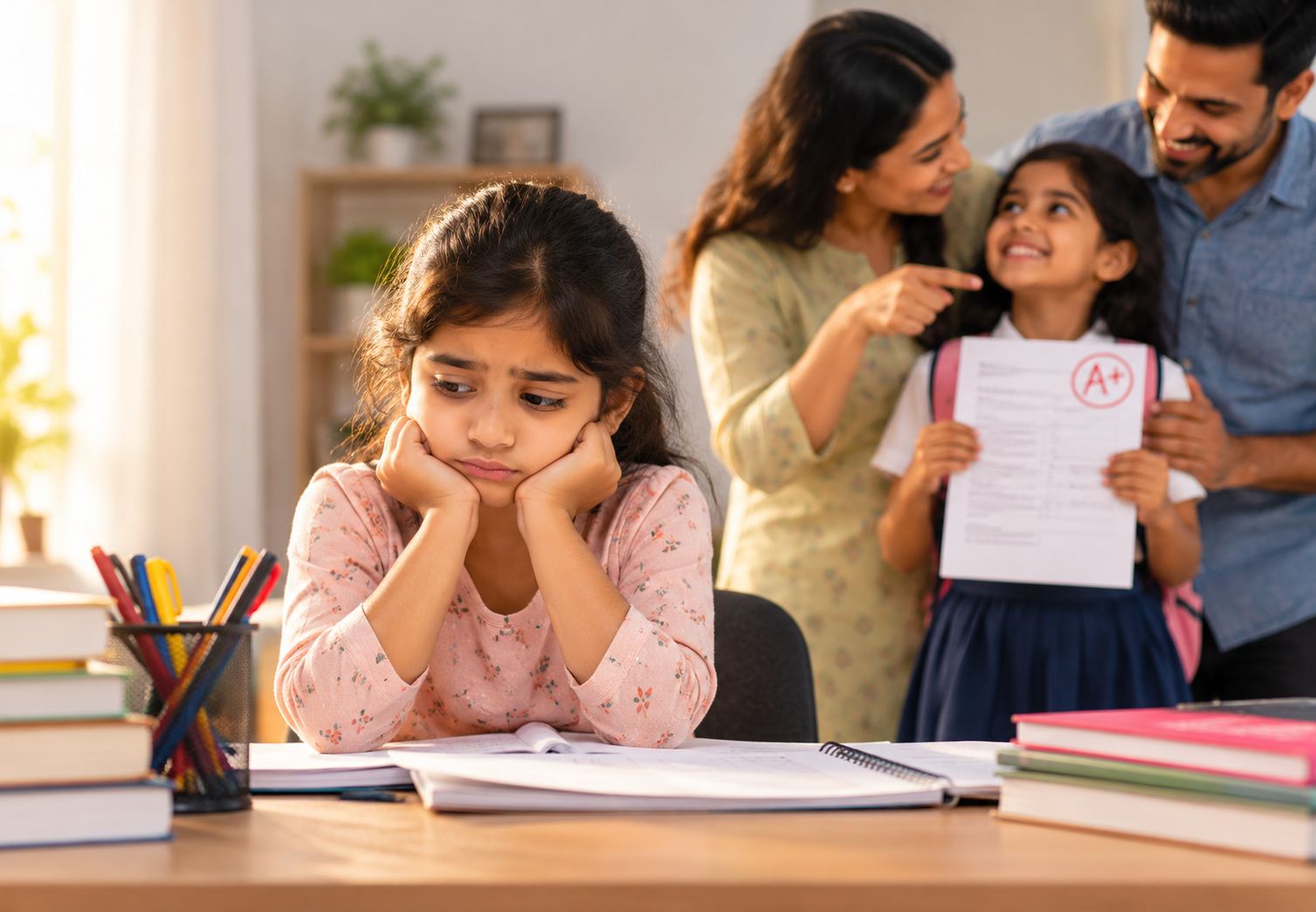
Every child is unique, and their journey to success should never be measured against someone else's achievement
“Look at your friend! Why can't you score marks like them?”
“Your cousin is so good at studies. Why aren't you?”
These statements may sound familiar in many households. Parents often compare their children with others, believing it will motivate them to work harder and achieve better results. However, constant comparison can have the opposite effect.
Every child has different strengths, interests, abilities, and learning styles. When children are repeatedly compared with their siblings, classmates, or friends, they may begin to question their own abilities.
Understanding the impact of comparison is essential for creating a positive learning environment where children feel confident, supported, and motivated.
When children constantly hear that someone else is performing better, they may begin to believe they are not good enough.
Over time, this can affect their confidence and willingness to try new things. Instead of focusing on their own progress, children may become overly concerned about meeting others' expectations.
What parents can do: Appreciate effort, recognize small improvements, and remind children that learning is a continuous process.
Academic competition is common in schools. However, constantly comparing marks, grades, and achievements can create additional pressure.
Some children may develop a fear of making mistakes or disappointing their parents. This fear can make learning stressful rather than enjoyable.
Parents should encourage children to set realistic academic goals based on their individual abilities and progress.
Some children understand concepts quickly, while others need additional time and practice.
One child may excel in mathematics, while another may demonstrate exceptional creativity, communication skills, or problem-solving abilities.
These differences do not make one child better than another.
Recognizing individual learning needs helps parents and teachers provide the right support.
Children need to feel accepted and valued by their parents.
When conversations frequently focus on how other children perform better, children may become hesitant to share their struggles, mistakes, or academic difficulties.
A supportive home environment encourages open communication.
Instead of asking, “Why can't you be like your friend?” parents can ask, “What part of this subject do you find difficult? How can I help you?”
This simple change can make children feel understood rather than judged.
Parents may believe comparison encourages healthy competition. However, repeated negative comparisons can sometimes discourage children.
When children feel that their efforts are never enough, they may lose interest in improving.
Motivation grows when children recognize their own progress and experience a sense of achievement.
Celebrating improvement, curiosity, and consistent effort can help children develop a healthier attitude toward education.
Here are five simple approaches that can make a meaningful difference:
Focus on personal progress: Compare your child's current performance with their previous achievements rather than another student's results.
Appreciate effort: Recognize dedication, consistency, and willingness to learn.
Identify individual strengths: Encourage interests beyond academic performance.
Create a supportive environment: Allow children to discuss mistakes and difficulties without fear of criticism.
Set achievable goals: Help children work toward realistic targets while celebrating small milestones.
Teachers also play an important role in building children's confidence.
A classroom should be a place where students feel comfortable asking questions, making mistakes, and learning at their own pace.
Recognizing different talents, providing constructive feedback, and encouraging individual improvement can help students develop a positive attitude toward learning.
Education should inspire children to discover their potential rather than make them feel they must constantly outperform others.
At Skool Guru, we believe that every student deserves the opportunity to learn, improve, and succeed at their own pace.
Our approach to online tuition emphasizes personalized attention, concept clarity, regular practice, and supportive learning experiences.
By understanding students' individual learning needs, we aim to help them build academic confidence and develop stronger foundations.
Because meaningful education is not about making every child the same. It is about helping every child become the best version of thems
Every child grows, learns, and succeeds differently.
Comparison may seem like a simple way to motivate children, but repeated negative comparisons can affect their confidence, motivation, and emotional well-being.
Instead of asking why a child cannot perform like someone else, parents and teachers should focus on how to help that child improve.
A child's greatest competition should not be another child. It should be their own previous progress.
When children receive encouragement, understanding, and the right educational support, they are more likely to develop the confidence to explore their abilities and reach their potential.


.png)