Loading advertisement...
Advertisement Popup
Advertisement content with navigation options
Loading advertisement...


24-11-2026
https://www.skoolguru.in/blogs/understanding-the-nsw-school-curriculum-a-parents-guide-1
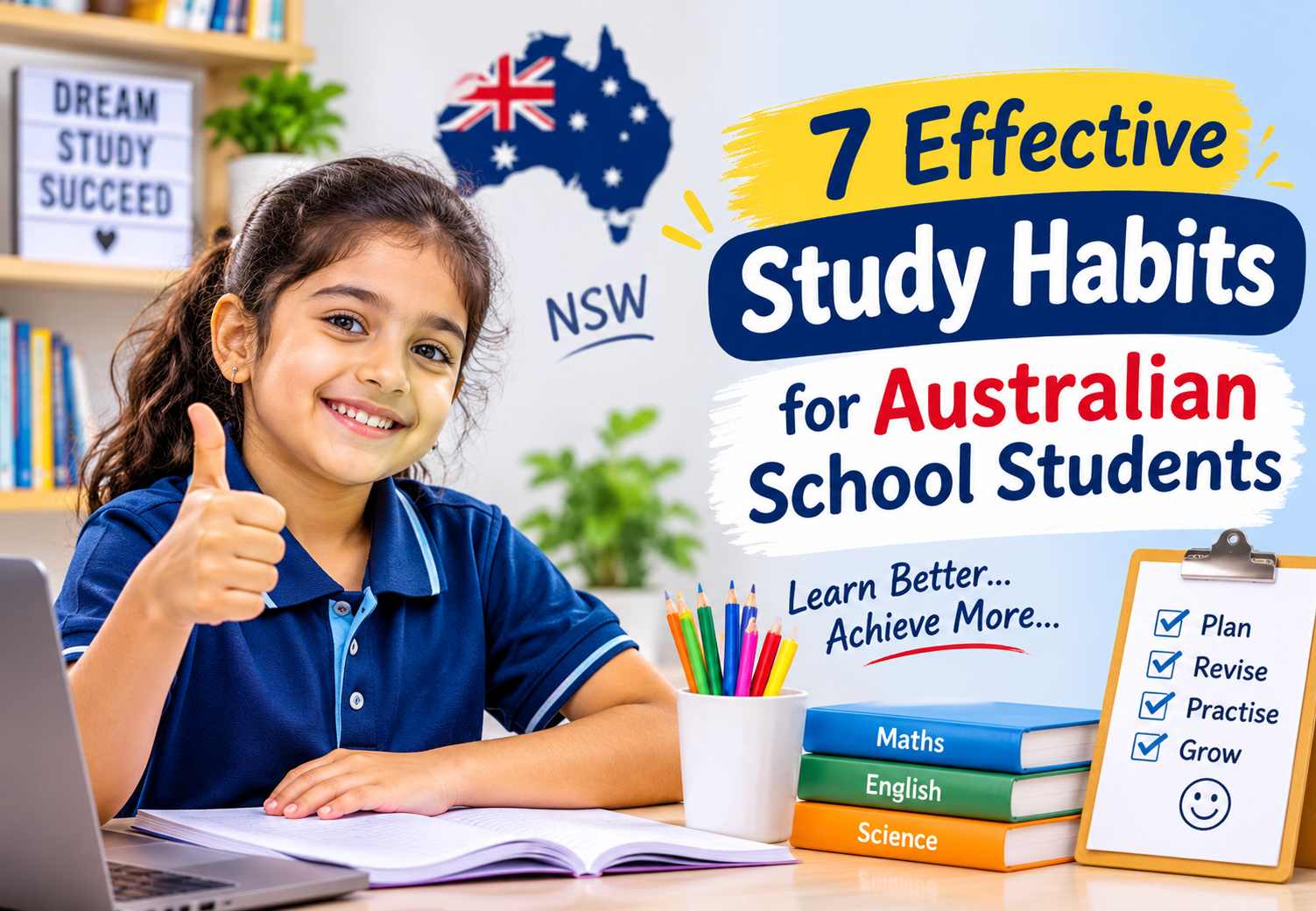
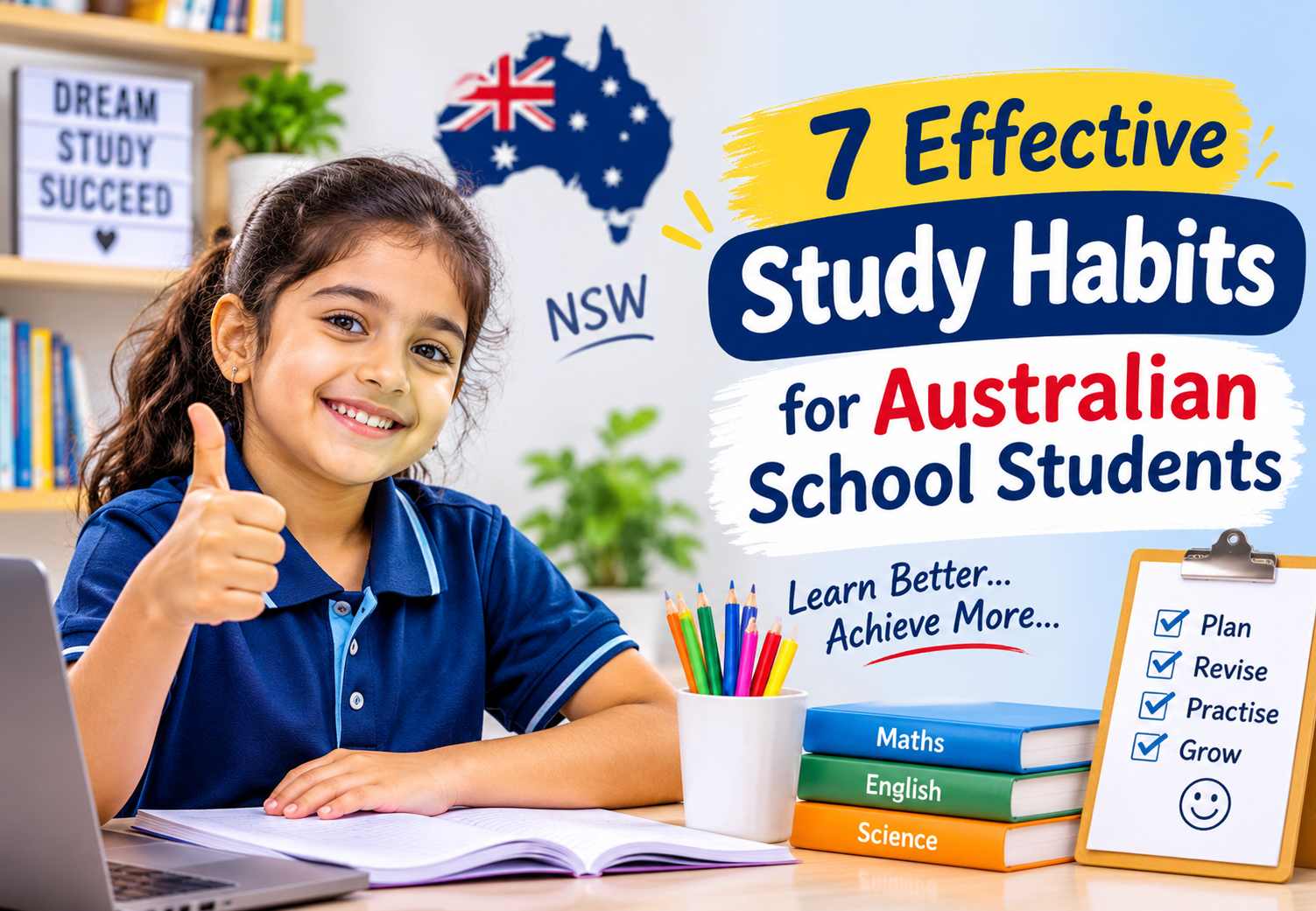
Developing good study habits from an early age can make a big difference in a child's academic journey. For students studying in Australian schools, especially those following the NSW curriculum, having a consistent learning routine can improve understanding, concentration and academic confidence.
Studying for long hours is not always the key to success. What matters most is learning effectively, staying organised and practising regularly.
Here are seven effective study habits that can help Australian school students become more confident and independent learners.
Having a regular study schedule helps children develop discipline and manage their time effectively.
Encourage your child to set aside a specific time each day for homework, reading and revision. A balanced routine should also include playtime, physical activity and sufficient rest.
Parent Tip: Start with short, manageable study sessions and gradually build consistency.
Students learn better when they understand what they need to achieve.
Instead of saying, "Study Maths today," encourage children to set specific goals such as:
Complete five Maths problems.
Read one English passage.
Learn five new vocabulary words.
Revise one Science topic.
Small achievements can motivate children to continue learning.
Simply reading textbooks repeatedly may not always help students remember information.
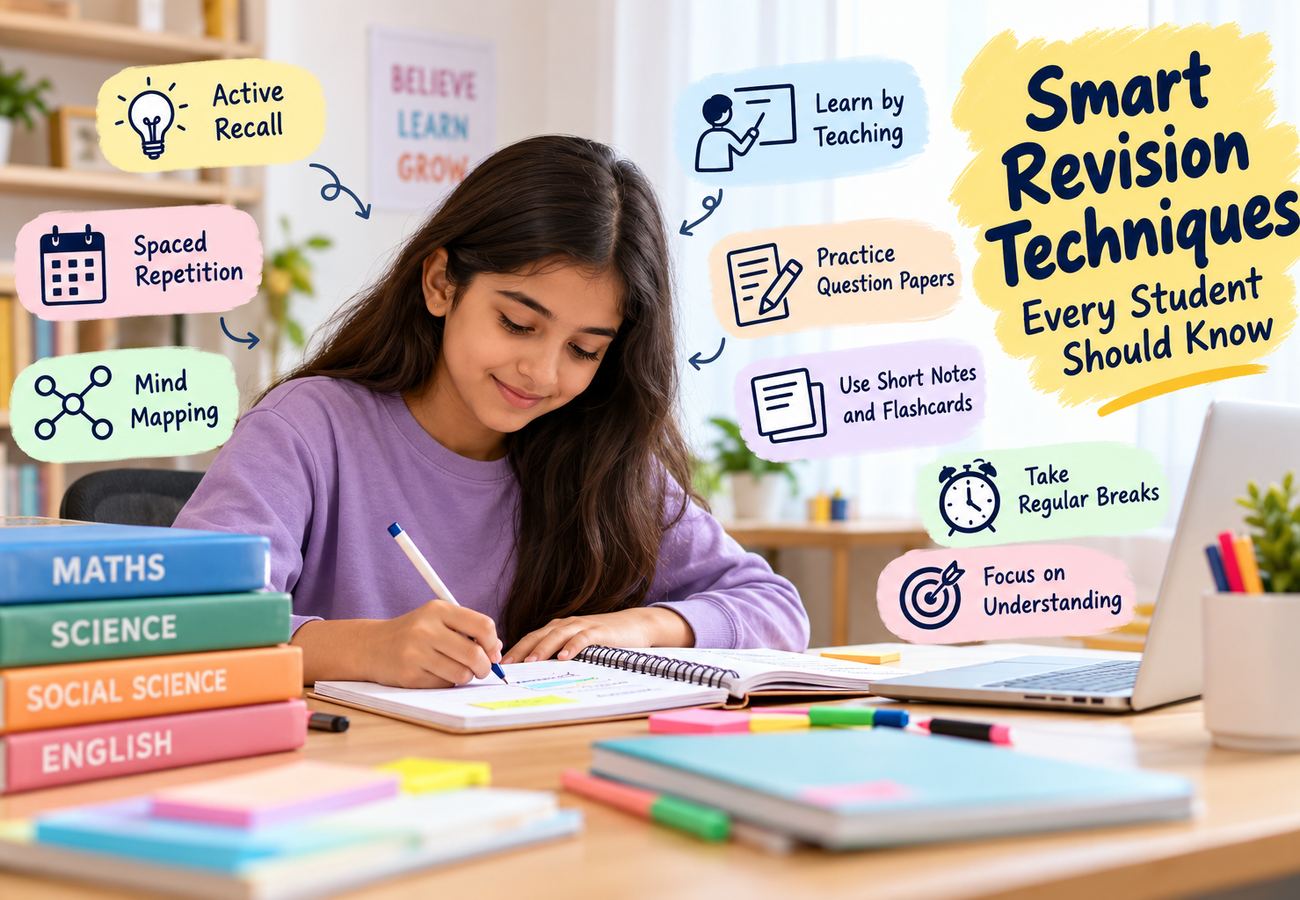
Active learning encourages children to participate in the learning process.
Some useful techniques include:
Explaining a topic in their own words.
Solving practice questions.
Creating mind maps.
Asking questions about what they learn.
Teaching a concept to someone else.
These activities help improve understanding and memory.
Waiting until the examination period to revise can make learning stressful.
Encourage students to review what they learned at school each day. Regular revision helps strengthen concepts and identify areas that need more attention.
For example:
Daily: Review important classroom lessons.
Weekly: Practise questions from completed topics.
Monthly: Revisit important concepts and learning gaps.
Consistent revision makes exam preparation more manageable.
Strong English reading and writing skills are important across different school subjects.
Students can improve these skills by:
Reading books appropriate for their age.
Learning new words every day.
Writing short paragraphs.
Practising spelling and grammar.
Summarising stories in their own words.
Regular practice can improve vocabulary, comprehension and communication skills.
A peaceful study environment helps children concentrate better.
Try to:
Choose a quiet and comfortable study space.
Keep unnecessary gadgets away.
Turn off non-essential notifications.
Take short breaks between study sessions.
Avoid multitasking.
Parents can also help children maintain a healthy balance between screen time and learning activities.
Every child learns at a different pace. Some students may understand classroom lessons quickly, while others may need additional explanation and practice.
Parents should observe their child's learning progress and identify areas where extra support may be helpful.
For example:
Difficulty understanding Maths concepts.
Challenges with English reading and writing.
Trouble remembering previously learned topics.
Lack of confidence when answering questions.
Getting the right support at the right time can help children strengthen their foundations.
Parents play an important role in developing positive learning habits.
Here are a few simple ways to support your child:
Appreciate effort rather than focusing only on marks.
Encourage curiosity and asking questions.
Provide a comfortable learning environment.
Stay connected with teachers about academic progress.
Give children enough time to learn at their own pace.
Remember, every child has a unique learning journey.
At Skool Guru, we understand that every child has different learning needs and academic goals.
Our individual online tuition focuses on:
Personalised learning support.
Concept-based teaching in English and Mathematics.
Support aligned with the student's school syllabus and year level.
Individual attention and practice.
Regular learning progress evaluation.
Parent updates on academic development.
Our goal is to help children build strong academic foundations and become confident learners.
Good study habits are not developed overnight. They grow through consistency, encouragement and the right learning support.
By following these seven simple habits, Australian school students can improve their learning experience, develop independence and approach their academic journey with greater confidence.
Start building better study habits today. Small steps can create lifelong learning success!