Loading advertisement...
Advertisement Popup
Advertisement content with navigation options
Loading advertisement...


31-10-2026
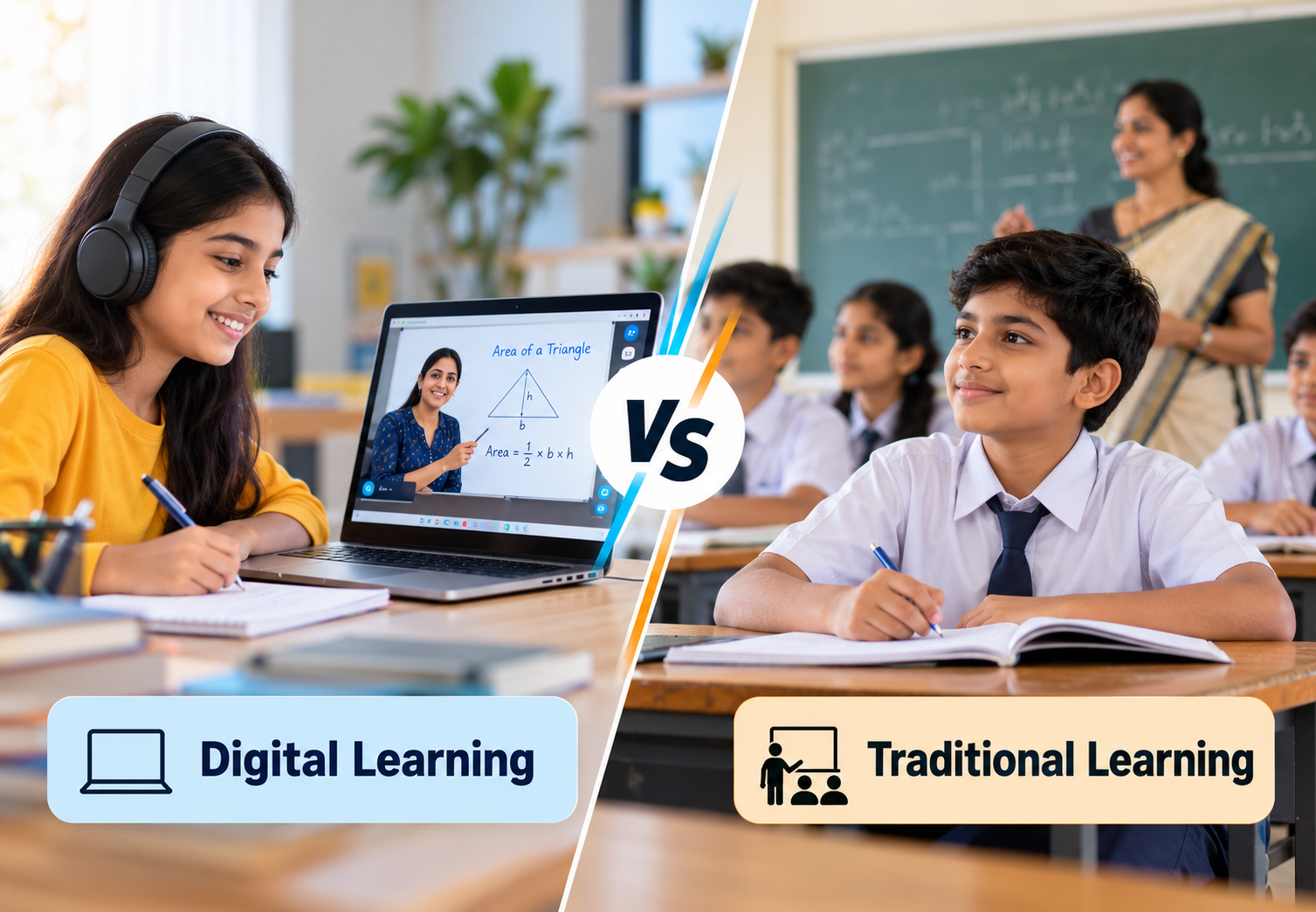
Education has changed significantly over the past few years. Students are no longer limited to classrooms, textbooks, and blackboards. With the growth of technology, digital learning has become an important part of modern education.
From online tuition classes to interactive learning platforms, students now have more ways to understand concepts and improve their academic performance.
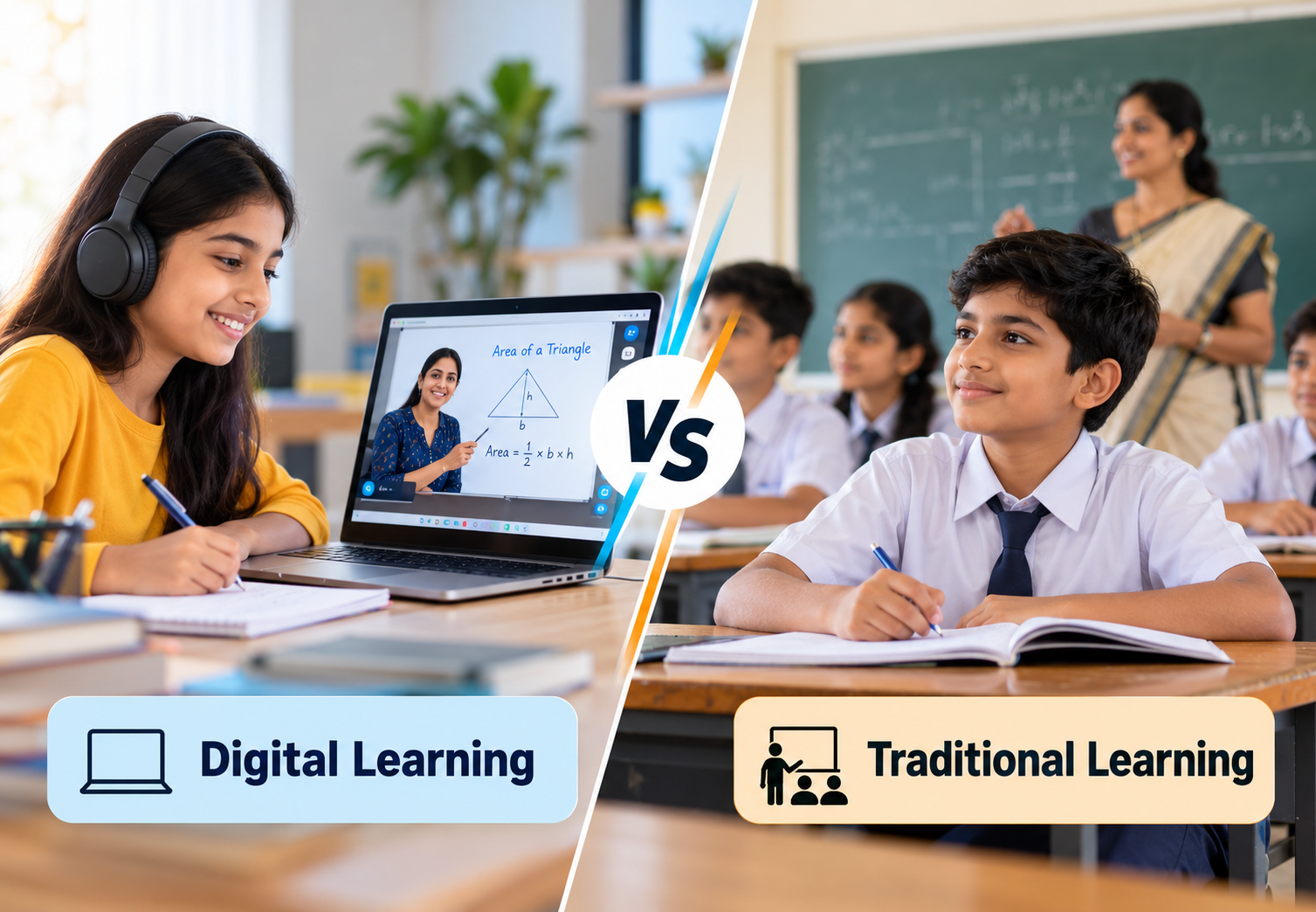
But an important question remains: Is digital learning better than traditional classroom learning? Or do students benefit more from a combination of both?
Let's explore the advantages, challenges, and differences between these two learning methods.
Digital learning refers to education delivered or supported through technology, including smartphones, computers, tablets, and online learning platforms.
Students can attend live online classes, watch educational videos, complete digital assignments, and interact with teachers from different locations.
Flexible Learning: Students can learn from home and access educational resources at convenient times.
Personalized Attention: Online one-to-one tuition allows teachers to focus on individual learning difficulties.
Interactive Learning: Videos, animations, and digital activities can make complex topics easier to understand.
Easy Access to Resources: Students can access study materials, practice questions, and recorded lessons.
Time-Saving: Online classes reduce travel time and make additional academic support more accessible.
Digital learning can be especially useful for students who need extra explanations or individual academic support.
Traditional learning usually takes place in physical classrooms where teachers and students interact face-to-face.
This method involves classroom discussions, textbooks, written assignments, and direct teacher supervision.
Face-to-Face Interaction: Students can communicate directly with teachers and classmates.
Social Development: Classroom activities encourage teamwork, friendship, and communication skills.
Structured Learning: Fixed schedules help students develop discipline and consistent study habits.
Practical Activities: Laboratory experiments, group projects, and hands-on activities support learning.
Immediate Guidance: Teachers can observe students and provide feedback during classroom activities.
Traditional classrooms play an important role in children's academic, emotional, and social development.
| Digital Learning | Traditional Learning |
|---|---|
| Learning through digital platforms | Learning in physical classrooms |
| Flexible access to resources | Fixed classroom schedules |
| Can provide personalized online support | Provides direct face-to-face interaction |
| Requires devices and internet access | Usually requires physical attendance |
| Offers interactive digital resources | Offers hands-on classroom experiences |
Both methods have unique strengths, and their effectiveness depends on the student's learning needs, age, available resources, and quality of teaching.
There is no single learning method that works best for every student.
Some students understand concepts better through classroom discussions, while others benefit from visual explanations, repeated practice, or individual attention.
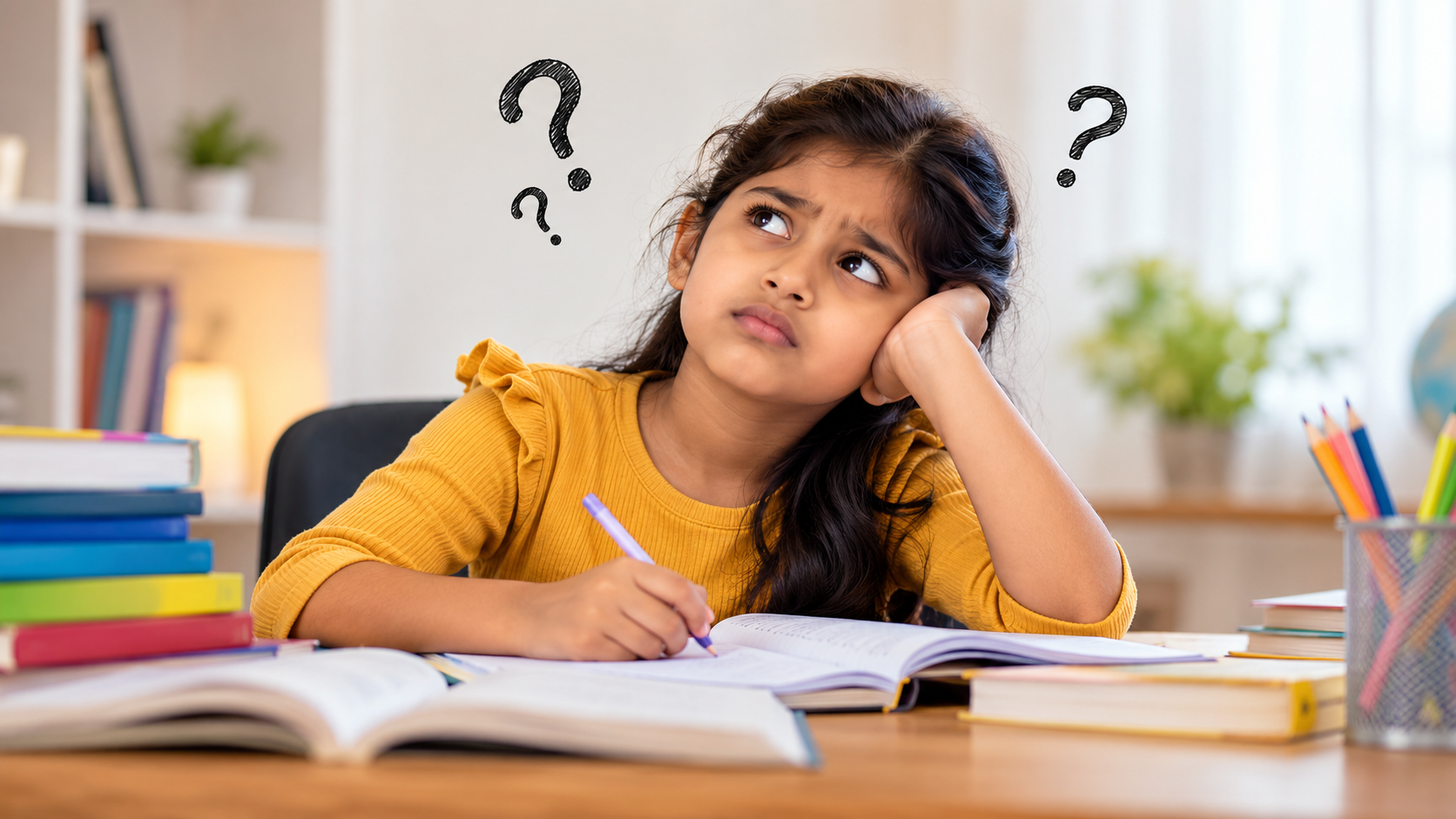
For example, a student may understand a mathematical formula in school but struggle to apply it when solving questions independently.
In such situations, additional online tuition can help the student revisit the concept, clear doubts, and practice different types of problems.
Similarly, students who struggle with English grammar, sentence formation, or reading comprehension may benefit from personalized learning sessions.
The most effective approach is often one that combines the strengths of both digital and traditional learning.
Blended learning combines traditional classroom education with digital learning resources.
Students can attend regular school classes while using online tuition, educational videos, and digital practice materials for additional support.
Better Concept Clarity: Students can revisit difficult lessons through additional explanations.
Regular Practice: Online exercises and assessments reinforce classroom learning.
Individual Learning Support: Teachers can focus on areas where students need improvement.
Improved Confidence: Students can ask questions and practice challenging topics in a supportive environment.
Continuous Progress: Regular assessments help identify learning gaps and track improvement.
When implemented effectively, blended learning can create a more flexible and supportive educational experience.
At Skool Guru, we understand that every child has a different learning pace and unique academic needs.
Some students require additional support in Mathematics, while others need help improving English, Science, or other subjects.
Our online tuition classes focus on helping students understand concepts rather than simply memorizing answers.
Experienced Teachers: Students receive guidance from teachers who explain concepts in simple, understandable ways.
One-to-One Online Tuition: Personalized attention helps identify and address individual learning difficulties.
Concept-Based Learning: Lessons focus on understanding topics and applying knowledge.
Doubt-Clearing Support: Students can clarify questions and strengthen their understanding.
Regular Progress Evaluation: Student performance is assessed, and progress updates are shared with parents.
Free Assessment and Demo Class: Parents can explore the learning support available before enrolling.
By combining classroom education with personalized online support, students can work towards stronger academic foundations
Digital learning and traditional learning should not necessarily be viewed as competing approaches.
Traditional classrooms provide social interaction, discipline, and practical learning experiences. Digital learning offers flexibility, additional resources, and opportunities for personalized academic support.
The best learning experience is not about choosing between technology and classrooms. It is about finding the right learning approach for each child.
With the right combination of classroom education, digital resources, and individual guidance, students can develop stronger learning habits and greater confidence.
Help your child overcome learning difficulties and build stronger academic foundations with Skool Guru's personalized online tuition.