Loading advertisement...
Advertisement Popup
Advertisement content with navigation options
Loading advertisement...


04-11-2026
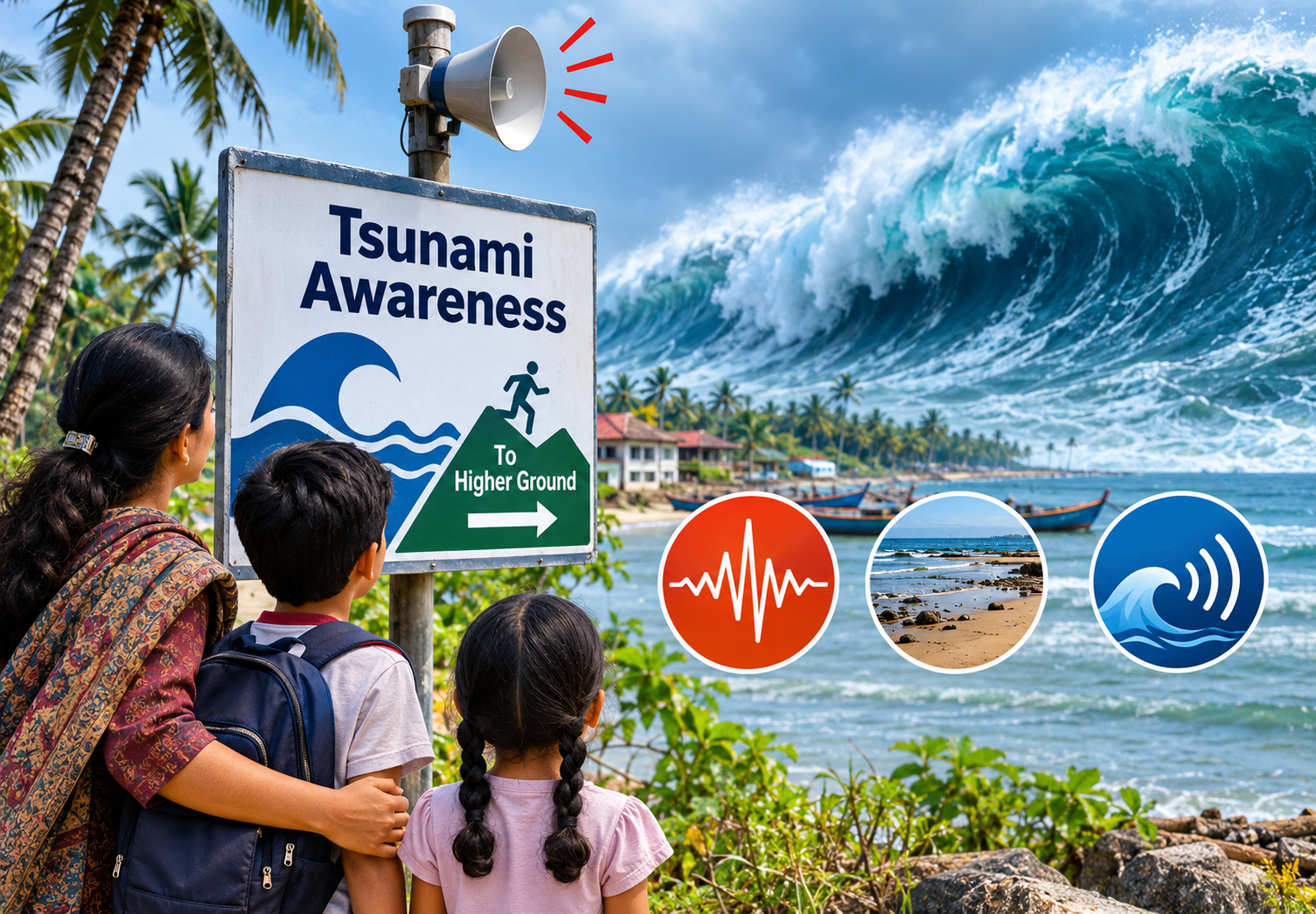
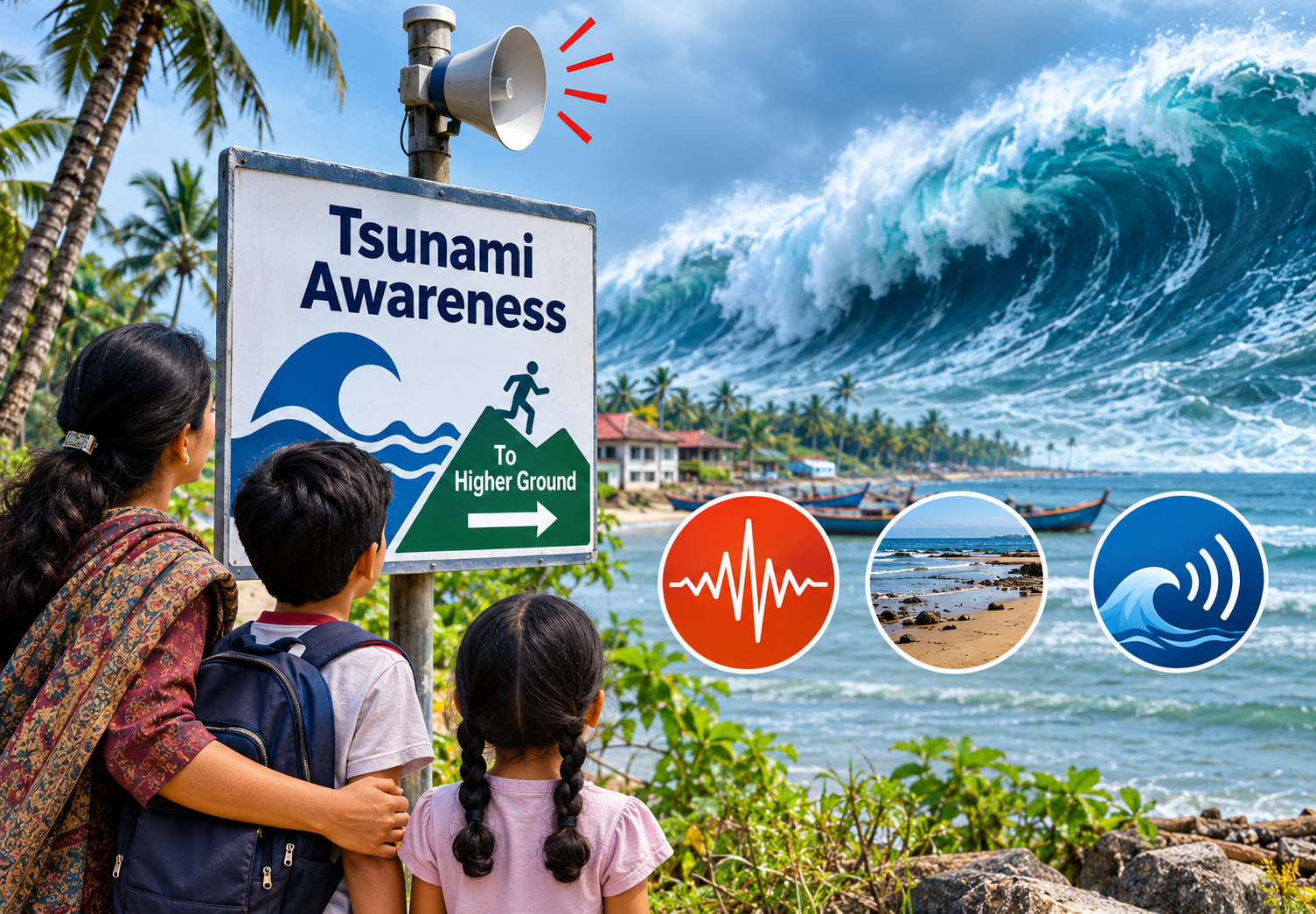
A tsunami can strike with little warning, but awareness, preparation, and quick action can save lives. Understanding tsunami warning signs and knowing how to respond are essential safety skills for students, parents, and communities living near coastal areas.
Natural disasters cannot always be prevented, but their impact can be reduced through education and preparedness. At Skool Guru, we believe that learning goes beyond textbooks. Teaching children about natural disasters and emergency safety helps them become more aware, responsible, and prepared.
A tsunami is a series of powerful ocean waves caused by the sudden displacement of a large volume of water. Unlike ordinary sea waves generated by wind, tsunamis are usually triggered by major disturbances beneath or near the ocean.
The most common causes include:
Underwater earthquakes: Sudden movements of the Earth's crust can displace seawater.
Volcanic eruptions: Underwater or coastal volcanic activity can generate tsunami waves.
Underwater landslides: Large movements of sediment or rock can push water outward.
Other rare events: Certain major impacts or geological disturbances can also generate tsunamis.
Tsunami waves can travel across entire oceans. As they approach shallow coastal waters, they may grow in height and cause severe flooding.
Tsunamis can cause widespread destruction, especially in coastal communities. They can damage homes, schools, roads, and essential infrastructure.
One of the greatest dangers is that a tsunami may arrive within minutes of a nearby earthquake, leaving very little time for evacuation.
Awareness helps people recognize natural warning signs, respond quickly, and move to safer locations.
For students, tsunami education is particularly important because children who understand emergency procedures are better prepared to follow safety instructions.
Nature may provide important warning signs before a tsunami reaches the coast.
If you are near the coast and experience strong or prolonged earthquake shaking, a tsunami may follow.
The ocean may suddenly retreat, exposing areas of the seabed that are normally underwater. In some cases, the water may rise rapidly instead.
A loud, unusual roaring sound from the ocean may indicate an approaching tsunami.
Important: Not every tsunami produces these warning signs. Never wait to see all of them before taking action.
Knowing the correct safety measures can make a significant difference during an emergency.
Move to Higher Ground
If you notice natural tsunami warning signs, immediately move away from the shoreline toward higher ground or farther inland.
Follow Official Warnings
Pay attention to instructions issued by disaster management authorities, local officials, and emergency services.
Stay Away From Beaches
Never approach the ocean to watch, photograph, or record tsunami waves.
Remember That the First Wave May Not Be the Largest
A tsunami consists of multiple waves, and dangerous conditions may continue for several hours.
Wait for Official Clearance
Do not return to coastal areas until authorities confirm that it is safe.
Parents play an important role in helping children understand natural disasters without creating unnecessary fear.
Here are some practical ways to introduce tsunami awareness:
Explain what a tsunami is using simple words and age-appropriate illustrations.
Teach children to recognize basic natural warning signs.
Discuss safe evacuation routes and designated meeting locations.
Encourage children to follow teachers, parents, and emergency officials during disasters.
Practise simple emergency drills at home and school.
Children should understand that emergencies require calm thinking, quick action, and cooperation.
Schools have an important responsibility to promote disaster awareness.
Safety education can be introduced through classroom discussions, awareness campaigns, educational videos, and supervised evacuation drills.
Students should learn about natural hazards as part of their general education, especially in regions vulnerable to earthquakes, floods, cyclones, and tsunamis.
Disaster preparedness is not just about memorizing safety rules. It is about developing practical life skills that can protect individuals and communities.
On December 26, 2004, a massive undersea earthquake near Sumatra, Indonesia, triggered one of the deadliest tsunamis in recorded history.
The disaster affected several countries, including India, Indonesia, Sri Lanka, and Thailand.
Coastal communities in India, including parts of Kerala and Tamil Nadu, experienced devastating impacts.
The tragedy highlighted the importance of tsunami warning systems, coastal preparedness, public awareness, and international cooperation.
Modern technology plays an important role in detecting potential tsunami threats.
Scientists use seismic monitoring systems, ocean observation instruments, and sea-level measurements to assess possible tsunami activity.
In India, the Indian Tsunami Early Warning Centre (ITEWC), operated by the Indian National Centre for Ocean Information Services (INCOIS), provides tsunami-related information and warnings.
However, for a nearby tsunami, natural warning signs may appear before an official alert reaches everyone. Immediate evacuation is therefore essential when those signs are observed
Tsunamis remind us of the immense power of nature and the importance of being prepared.
While we cannot prevent natural disasters, we can reduce their risks through education, awareness, early warning systems, and responsible action.
Teaching children about tsunami safety is an investment in a safer future.
At Skool Guru, we believe education should prepare students not only for examinations but also for real-life challenges.
Stay informed. Stay prepared. Stay safe.
Skool Guru – Empowering Young Minds Through Knowledge and Awareness.